
A coherent public presence, run by the whole group.
One place where a group turns its research into public communication — the site, the newsletter, the press — with a plan behind it, a voice everyone shares, and every piece reviewed before it goes out.
A study from the group shows that patterning a titanium surface at the nanoscale changes how cells settle on it — a step toward implants the body accepts faster. The team stresses the work is at an early, laboratory stage.
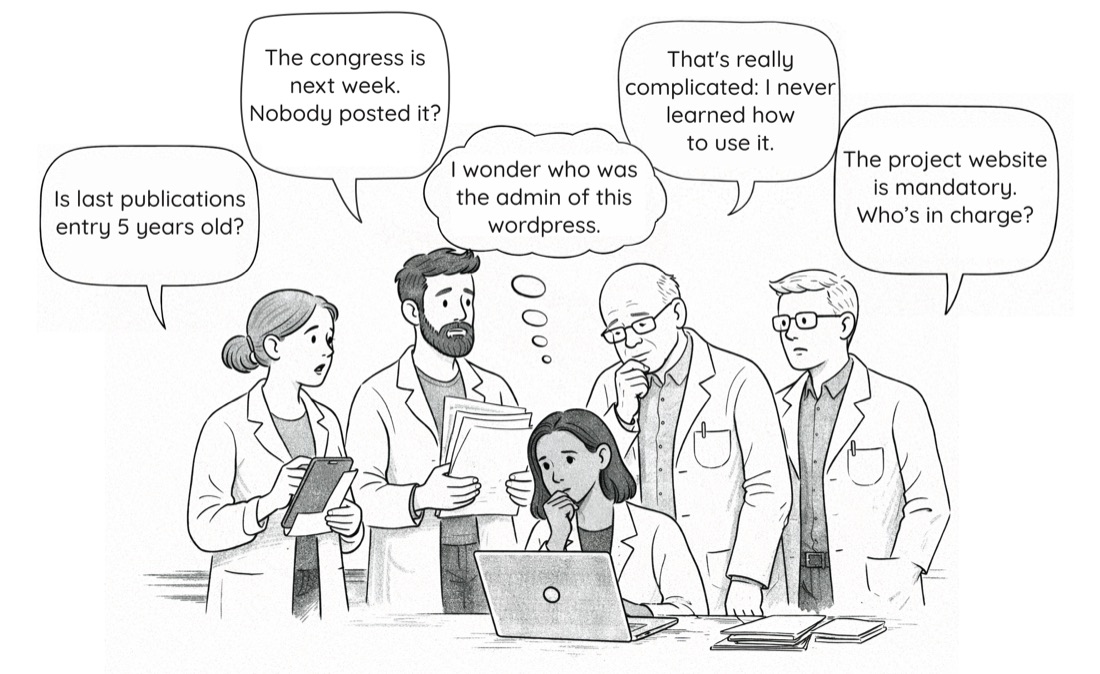
Who owns how the group is seen?
The site nobody remembers the login for. The publications list that stops five years ago. The press note written the night before a deadline. Sooner or later it all lands on one person — and it stays there until they leave.
One loop, from the work to the world
The science is the hard part; communicating it shouldn't take a specialist. Monko turns it into a loop the whole group can run — sources in, drafts out, published only on approval.
It gathers your sources
Papers arrive automatically through ORCID; talks, meeting notes and project drafts come in by hand or through an agent — as they happen.
It drafts the communication
Posts, social, a press release — written against your Sourcebook so the voice and the claims are the group's.
You get a publication plan
One plan the group can approve, adjust, or rerun — nothing goes out unreviewed.
It schedules and publishes
On your own site first, then the newsletter and channels you chose — on your domain, hosted in Europe.
The parts that keep it yours

The Sourcebook
Your identity and memory in one place: how you describe the work, the claims you avoid, the people, the funders to credit.

Review queue
Every draft waits for a human. Approvals take minutes and teach the Sourcebook as they go.

Audiences & channels
Peers, funders, press, prospective students — reached where they already are, from one approved source.
Your site, and it stays yours.
The presence lives on your own domain and updates the moment you approve. Monko keeps it current; you keep the keys.
Why the interface decides: cell fate on nanostructured surfaces
The same alloy behaves differently once its surface is patterned at the nanoscale — and everything downstream follows from that first encounter.
See it run on your own group
Bring three recent outputs to a 30-minute call and we will show your presence, drafted in your voice, waiting for your approval.